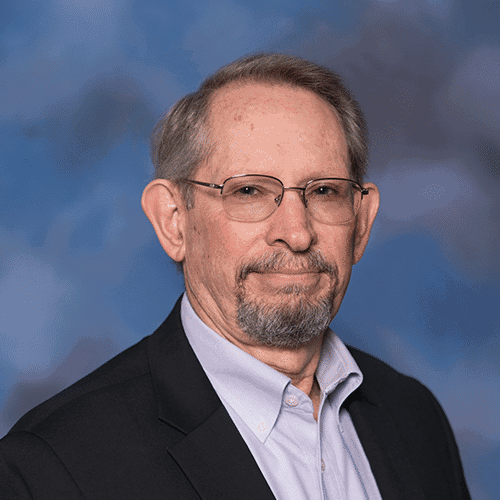
Deborah Sacrey Presents at the 2026 GSH Spring Symposium
Machine Learning: The Next Disruptive Technology Changing Sub-Surface Interpretation
Machine learning is rapidly transforming how geoscientists interpret seismic data—unlocking insights that were previously difficult, time-consuming, or even impossible to extract using conventional workflows.
At the 2026 Geophysical Society of Houston (GSH) Spring Symposium, Deborah Sacrey, Executive Director of Operations at Geophysical Insights, will present a practical, methodology-driven look at how machine learning is reshaping subsurface interpretation. This session will focus on how modern workflows combine advanced algorithms with geophysical expertise to deliver faster, more consistent, and more meaningful results.
What You’ll Learn
This presentation explores a structured machine learning workflow designed specifically for seismic interpretation. Key concepts include:
- Seismic data conditioning and enhancement to improve signal quality and highlight geologic features
- Deep learning techniques, including convolutional neural networks (CNNs), to identify patterns and discontinuities in seismic volumes
- Attribute integration and multi-dimensional analysis to capture subtle geological variations
- Unsupervised learning methods, such as self-organizing maps (SOMs), to classify seismic responses into meaningful geologic groupings
- Post-processing and interpretation workflows that reduce noise, minimize false positives, and improve interpretability
Rather than replacing the interpreter, these approaches augment human expertise, helping geoscientists move beyond manual, time-intensive interpretation toward a more data-driven and scalable process.
Why It Matters
Traditional seismic interpretation methods often struggle with:
- Noise and data complexity
- Subtle stratigraphic and structural features
- Time constraints in large 3D datasets
Machine learning addresses these challenges by analyzing seismic data at scale, identifying patterns across multiple attributes, and delivering more consistent results. For example, integrating deep learning with seismic attributes can significantly reduce interpreter bias while improving fault detection and structural understanding.
By combining supervised and unsupervised techniques, modern workflows can enhance feature detection, suppress noise, and generate classification volumes that better represent subsurface geology.
Featured Speakers

Deborah Sacrey
Executive Director of Operations
Geophysical Insights
Deborah Sacrey is Executive Director of Operations at Geophysical Insights and a recognized leader in seismic interpretation and machine learning applications. With decades of industry experience, she has been at the forefront of integrating advanced analytics into geophysical workflows, helping organizations extract greater value from their seismic data.
Event Details
📅 Date: 22 – 23 April 2026
📍 Venue: Norris Conference Centers – Houston/CityCentre
816 Town & Country Blvd, Suite 210
Houston, TX 77024
Registration
Registration has closed.